Randy M. Friedberg
Partner
Business Vantage Point Blog
Go to Business Vantage Point BlogADA Website Accessibility Claims Are on the Rise: Steps to Mitigate Risk
August 17, 2026Enacted in 1990, the public policy underpinning the Americans with Disabilities Act (ADA) was to guarantee individuals with disabilities equal access to public accommodations, employment, transportation, state and local government services, and telecommunications. That policy objective has run squarely into the realities of the plaintiffs’ bar. As a result, operators of websites face ever-increasing claims, from both claimants — often class representatives — who allege access barriers, and serial litigants seeking hasty settlements. These may come in the form of demand letters or filed litigation. The point is, if you operate a website, you are likely to receive one or more of these claims. What Makes a Website ADA-Compliant? Courts have made clear that websites and mobile applications fall under the ADA when they operate as gateways to goods, services, privileges or advantages of a physical place of public accommodation. Courts have held that a website alone is not a “public accommodation,” but if there is some nexus to the physical place or business, it may be considered one. The issue is not whether the ADA’s accessibility obligations apply, but what specific steps are sufficient to satisfy them. In the Title III context, courts generally look for a nexus between the challenged digital platform and the defendant’s physical goods or services and then ask whether the website or app creates a tangible or intangible barrier that prevents individuals with disabilities from accessing those offerings. Because neither the statute nor case law clearly defines the ADA’s requirements for website compliance, the Web Content Accessibility Guidelines (WCAG) published by the World Wide Web Consortium (W3C) explains how to make websites more accessible to individuals with disabilities, including “natural information such as text, images, and sounds” and “code or markup that defines structure, presentation, etc.” Today, websites generally should conform to WCAG 2.2 Level AA to support ADA compliance. An ADA compliance checklist begins with understanding the organization’s obligations. Organizations should then conduct an accessibility audit, ideally including functional testing by people with disabilities, to identify barriers and real-world usability issues. After remediation, tools such as overlay widgets may help address certain issues, but accessibility requires ongoing monitoring and updates as digital accessibility standards evolve. WCAG guidance is extensive, and full compliance can be difficult to achieve. Inexpensive accessibility tools such as accessiBe, UserWay and AudioEye may help organizations identify and address some barriers, but they are not complete solutions and do not guarantee ADA compliance. (See In the Matter of accessiBe, FTC Docket No. C-4817, Decision and Order (April 21, 2025); and BloomsyBox.com v. UserWay, No. CV 24-844-RGA, 2026 WL 412716, at *1 (D. Del. February 13, 2026).) By contrast, in 2023, AudioEye announced it successfully defended a client in New York federal court by showing that the challenged website did not contain access barriers to users with disabilities. A more effective approach combines automated and AI-assisted tools with meaningful human review. What Actions Can Website Operators Take to Minimize Risk? Organizations should treat website accessibility as an ongoing compliance priority rather than a one-time technical fix. To reduce the risk of access barriers and minimize ADA claims and exposure, organizations should assess their websites and mobile apps against WCAG 2.2 Level AA and engage qualified accessibility professionals to conduct testing, including testing by individuals with disabilities. Organizations should promptly remediate identified issues and incorporate accessibility review before new content or products are launched. Automated and AI-assisted accessibility tools may help identify and address certain issues, but they should not replace meaningful human testing and remediation. There is no way to guarantee that an organization will avoid a claim or litigation, but a robust compliance program can both meaningfully improve access for users with disabilities and minimize the organization’s exposure. If a company receives a claim, it should put its insurance carrier on notice and contact its counsel immediately. Summer associate Lexi Naskiewicz contributed to this blog post.
Trademarks, Right of Publicity, and the Emerging Trend to Protect Celebrity Identity
May 11, 2026The rapid onset of generative artificial intelligence (AI) — particularly its ability to create hyper-realistic deepfakes and appropriate the image, voice, mannerisms and likeness of celebrities and other public figures (collectively, NIL), sometimes for nefarious or unauthorized purposes — has sparked interest in finding new and novel ways to protect public figures and their NIL. One novel avenue being explored recently is the use of trademark law in conjunction with the rights of publicity and privacy. As generative AI makes it easier to replicate identity, trademark law and the right of publicity are increasingly viewed by some as tools for preserving commercial value, preventing unauthorized exploitation, and addressing consumer confusion. What Is the Right of Publicity? The right of publicity is an intellectual property doctrine that safeguards individuals from the unauthorized use of their NIL, including their voice, signature or photograph for commercial purposes. It is a state-level legal right that allows individuals to control and profit from the commercial exploitation of their likeness and identity. However, because no federal statute exists, protections vary wildly by state. Some states have adopted the right of publicity through legislation, while others recognize it via judicial decisions. The current differences in the various state laws on the right of publicity have created an inconsistent framework for protection. For example, states vary in their treatment of postmortem publicity rights, including whether the right continues after death, how long any such protection lasts, and whether the right may be inherited or assigned. The Intersection of Trademarks and Right of Publicity A person’s NIL can, through proper trademark use in commerce and/or registration with the U.S. Patent and Trademark Office (USPTO), function as a trademark under federal law if that person can establish that an aspect of their identity would be recognized as a source identifier. Such trademark protection can confer nationwide rights, and if used and maintained correctly, can last with no end or termination date. As a result, some celebrities register their names, popular phrases and likenesses as trademarks. Trademark law and the right of publicity serve distinct purposes, but are closely related and often used by celebrities and other public figures to protect the same commercial interests. Trademark law protects words, phrases, symbols and other source-identifying features that distinguish goods or services in the marketplace. Its focus is on the consumer’s perspective, preventing confusion about the source and protecting the goodwill associated with the trademark holder. The right of publicity, by contrast, protects an individual’s identity from unauthorized commercial exploitation. While trademark law protects consumers from confusion, the right of publicity protects the individual’s ability to control the commercial use of their identity. In that sense, the two doctrines operate as two sides of the same coin. This also explains why many celebrities seek trademark registration as a way of controlling how their names and images are used commercially. Courts consider both bodies of law as close analogs and are increasingly recognizing that each aims to safeguard the commercial value associated with identity. In some jurisdictions, case law has established that the right of publicity focuses on the right of an individual to reap the reward of their endeavors and to prevent unjust enrichment by theft of goodwill, while trademark protection focuses on ensuring consumers know the source of the good or service they are receiving and preventing the theft of goodwill created by the producer of the good or service. A celebrity’s name, likeness and voice can each be a trademark, indicating source and constituting the protected aspect of identity, focusing on protecting consumers from confusion about the source of the good or service. The right of publicity seeks to protect much of the same interest but on the other side of the coin; rather than focusing on and protecting against consumer confusion, like trademark law, it concerns the ability of a person, especially a celebrity whose identity itself holds commercial value, to control that identity and to decide how their NIL is used in commerce. Both should allow celebrities to protect themselves from unauthorized endorsements, deepfakes or AI-generated likenesses, where the harm is both to the individual’s autonomy and identity and to consumer understanding. A Fad or a Modern Trend? The convergence of trademark doctrine and publicity rights may become a defining legal response to AI-enabled reproductions and derivatives, as demonstrated by recent USPTO actions taken by celebrities seeking to formalize protection around their distinctive identity features. In January, actor Matthew McConaughey obtained eight trademark registrations for several audio specimens of him saying well-known phrases from his films, including, “Just keep livin’, right? I mean, what else are we gonna do?” and “alright, alright, alright,” as well as visual specimens consisting of photographs and videos of himself. Most recently, in April, singer-songwriter Taylor Swift, following McConaughey’s lead, filed three trademark applications to trademark her voice and likeness. The audio specimens include Swift’s voice saying, “Hey, it’s Taylor Swift,” and “Hey, it’s Taylor,” and the visual specimen is described as “a photograph of Taylor Swift holding a pink guitar, with a black strap and wearing a multi-colored iridescent bodysuit with silver boots. She is standing on a pink stage in front of a multi-colored microphone with purple lights in the background.” None of these trademarks have been tested in court, including in the context of unauthorized AI-generated uses. The Need for a Federal Right-of-Publicity Law Recent cases involving McConaughey and Swift, both of whom have utilized protections at the intersection of federal trademark law and the right of publicity, suggest that other celebrities and individuals whose identities hold commercial value may pursue similar protections for their NIL. As a result, the need for a uniform federal right-of-publicity law is more pressing than ever. The rapid rise of AI has only heightened that need, particularly given the increasing overlap between the right of publicity and key trademark protections in the entertainment and sports industries. AI tools now allow a celebrity’s NIL to be copied, manipulated and exploited at a speed and scale that existing state law protections may not be equipped to address. A federal regime would provide consistency and reduce the confusion and lack of uniformity created by the current state-by-state framework. It would also relieve some of the burden on courts and the USPTO, which are increasingly required to adapt and stretch existing law, such as the Lanham Act and current right-of-publicity case law, to address gaps exposed by novel AI-related disputes. In addition, a federal law would reduce forum-shopping based on variations in state laws. A uniform federal law would also give celebrities and other similarly situated individuals considering the McConaughey and Swift approach a greater measure of control over how their identities are used in commerce; clearer guidance on the scope of available protection; and a stronger, more predictable legal framework to challenge unauthorized uses. Much like trademark law, which provides federal protection while still allowing for parallel state-law rights, a similar structure for right-of-publicity law would allow celebrities with national and global reach to pursue nationwide protection, while preserving state law remedies for more local uses. Ultimately, a federal right-of-publicity law would complement federal trademark protection under the Lanham Act by giving individuals a more effective and nationwide means of protecting the commercial value of their NIL in the AI era. Trademark Applications for NIL Likely to Increase The intersection of trademark law and right-of-publicity protection appears less like a passing fad and more like an emerging long-term trend. As AI makes it easier to imitate a celebrity’s NIL, more artists, celebrities and brands are likely to look to trademark law and the right of publicity as practical tools to protect the commercial value of their identities. High-profile examples like McConaughey and Swift suggest that this strategy is gaining traction, and it would not be surprising to see more celebrities follow suit. As concerns over AI-generated deepfakes and unauthorized digital reproductions continue to grow, a federal right-of-publicity law addressing joint right-of-publicity and trademark protection would provide a more coherent and effective means of protecting commercially valuable identity rights.
When It Comes to Copyright Law, AI Is Like a Camera
May 5, 2025Even in its relatively nascent form, artificial intelligence, or AI, is already running headlong into multiple conflicts with existing copyright law. One or the other is going to have to blink, to change and adapt, and it’s not going to be AI. One of the existing conflicts is whether AI can be an author for the purposes of copyright law. The U.S. Copyright Office and relevant court decisions have taken a clear position: Any content created solely by AI is not copyrightable; human participation is required. A person may use AI as a tool to assist in the creative process so long as the person’s contribution is substantial and sufficient to meet the requirements for copyright. While the bar for a person’s contribution is generally a very low one for most copyrightable work, the scope of contribution in connection with AI-generated works remains an unresolved issue. Some cases do discuss a standard, and most agree it is a circumstantial analysis that will vary by the specific facts. The issue, while novel in its application, is not new, but the conflict between the law and technology has never been as staggeringly important or the chasm as large as it is today. Copyright Office Clarifies Its Practices for AI-Generated Work The Copyright Office issued a statement of policy on March 16, 2023, to clarify its practices for examining and registering works that contain material generated by the use of AI technology (37 CFR Part 202). This statement was prompted by the Copyright Office receiving registration applications naming AI technology as the author or co-author or involving AI-produced or AI-assisted content. The statement clarified that only content created by a human can be the subject of a copyright. As the agency overseeing the copyright registration system, the Office has extensive experience in evaluating works submitted for registration that contain human authorship combined with uncopyrightable material, including material generated by or with the assistance of technology. It begins by asking “whether the 'work' is basically one of human authorship, with the computer [or other device] merely being an assisting instrument, or whether the traditional elements of authorship in the work (literary, artistic, or musical expression or elements of selection, arrangement, etc.) were actually conceived and executed not by man but by a machine.” In the case of works containing AI-generated material, the Office will consider whether the AI contributions are the result of “mechanical reproduction” or instead of an author's “own original mental conception, to which [the author] gave visible form.” The answer will depend on the circumstances, particularly how the AI tool operates and how it was used to create the final work. This is necessarily a case-by-case inquiry (37 CFR Part 202) (footnotes omitted). Supreme Court Rules Copyrightable Works Need Human Authorship As far back as 1884, the U.S. Supreme Court weighed in on the issue of the need for human authorship in copyrightable works. The issue was whether using a camera to take a photo meant that the work was not created by a person and therefore not copyrightable. In Burrow-Giles Lithographic v. Sarony, 111 U.S. 53 (1884), a defendant who had made unauthorized copies of a photograph argued that photographs were not copyrightable because the image at issue was created by a camera and not by a person. The court disagreed, finding that the Copyright Clause of the U.S. Constitution permitted photographs to be copyrightable “so far as they are representatives of original intellectual conceptions of the author.” The court defined “author” as the person “to whom anything owes its origin; originator; maker; one who completes a work of science or literature.” The decision repeatedly refers to such “authors” as humans. D.C. Circuit Affirms AI Cannot Be Sole Author for Copyright Protection Fast-forward 140 years and the holding still stands, but now the issue is whether a work created by AI can be the subject of copyright. Stephen Thaler, a computer scientist, developed a generative AI system called the Device for the Autonomous Bootstrapping of Unified Sentience (DABUS), also known as the “Creativity Machine.” He used his Creativity Machine to create a graphic image called “A Recent Entrance to Paradise,” which he then sought to register with the Copyright Office. In the registration application, he identified the Creativity Machine as the author of the work. The Copyright Office rejected the application because the image was not created by a human being. The U.S. District Court for the District of Columbia upheld the denial, and Thaler appealed. In Thaler v. Perlmutter, 687 F. Supp. 3d 140, 142 (D.D.C. 2023), the U.S. Court of Appeals for the D.C. Circuit on March 18 affirmed the district court’s refusal to allow registration, ruling in a unanimous decision that, consistent with Burrow-Giles, human authorship is a statutory requirement for registration. The court clarified, among other things, that: (1) while the human authorship requirement does not fully prohibit copyright protection to works made by or with AI assistance, entirely autonomous authorship in the principal case is not copyrightable; and (2) whether a work made with AI can be registered depends on the specific situation, particularly how the AI tool operates and how much it was used to create the final work. For works created with authorship by both humans and AI technology, the Copyright Office, aligned with its 2023 statement of policy, has allowed certain elements of artistic works to have copyright protection, while leaving other elements unprotected. For example, in reviewing a registration application for a graphic novel containing human-authored texts with AI-generated images, the Copyright Office determined that the combined work of both human and AI constituted copyrightable work; however, the individual AI-generated images themselves could not be protected. (“Zarya of the Dawn” (Registration # VAu001480196) (2023).) More Guidance Needed on Scope of Human Involvement Required for Copyrightable Works In general, a string of recent rulings from the Copyright Office concerning AI–human works have allowed copyright registration as to the human-created portions of such works. This makes sense for a number of policy reasons and is consistent with existing precedent. Copyright law is intended to benefit the public by incentivizing authors; it is not meant, ultimately, to benefit authors. However, as AI tools become ever more ingrained in the day-to-day world of creators, it is likely that the line between human and AI creations will become ever more blurred. While the Copyright Office has already issued guidance that prompts alone do not constitute sufficient human involvement or input to render the AI-generated output a copyrightable work, the scope of human involvement that is required remains unresolved. AI is clearly a machine that intervenes between a human and a creation, like a camera, but unlike a camera, more sophisticated and nuanced guidance is going to be required for future copyright analyses.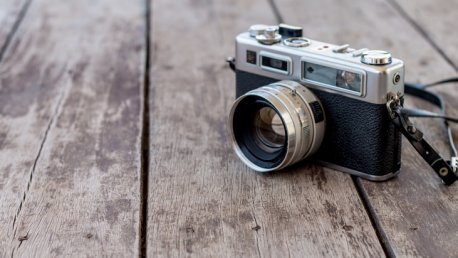
When Entertainment and Trademark Law Collide: ‘The White Lotus,’ Duke University and the Rogers Test
April 15, 2025Season 3 of HBO’s “The White Lotus” features the Ratliff clan. The patriarch, Timothy Ratliff, and his eldest son, Saxon, attended Duke University. Timothy’s spouse and Saxon’s mother, Victoria, went to Duke’s competitor, the University of North Carolina at Chapel Hill, where their daughter, Piper, is currently enrolled. Lochlan, the youngest son, currently weighs his options between these rival institutions. However, only Timothy Ratliff knows that while the family is vacationing in Thailand, he has been implicated in a money-laundering scheme. Consequently, upon the family’s return home their existence will dramatically transform, sending Ratliff into a psychological tailspin. During his mental health crisis, Ratliff sports a shirt displaying the Duke name and trademark, including when he contemplates ending his life and repeatedly points a firearm at his head. In response, Frank Tramble, vice president of communications, marketing and public affairs at Duke, said in a emailed statement that “Duke appreciates artistic expression and creative storytelling but characters’ prominently wearing apparel bearing Duke’s federally registered trademarks creates confusion and mistakenly suggests an endorsement or affiliation where none exists.” Tramble said that the show “not only uses our brand without permission, but in our view uses it on imagery that is troubling, does not reflect our values or who we are, and simply goes too far.” Why No Legal Challenge? Enter the Rogers Test Despite its objections, Duke pursued no action against HBO. The rationale may be that “The White Lotus” employs the Duke and Duke mascot trademarks to convey details about a character’s background rather than to brand the series itself. This storytelling application likely receives First Amendment protection under the Rogers test, which seeks to distinguish between protected fair use and trademark violation. The test, which has been applied by courts across the United States, seeks to find the line between protected fair use and trademark infringement. This determination is heavily dependent on context and requires analysis of whether an unauthorized trademark use furthers artistic expression at a level that is greater than zero or is simply branding. The Rogers test emerged from the U.S. Court of Appeals for the Second Circuit in Rogers v. Grimaldi, 875 F.2d 994 (2d Cir. 1989). In the 1989 case, Ginger Rogers sued the creators and distributors of the film “Ginger and Fred,” alleging the movie’s title infringed her trademark rights. The court dismissed the case, finding that the use of Rogers' name in the film title was an artistic work that had an expressive element, not commercial speech, and therefore was protected by the First Amendment and not subject to the Lanham Act (the federal trademark and unfair competition statute, 15 U.S.C. 101, et seq.). In short, the Rogers test establishes that when a use of a trademark is expressive, there is no trademark infringement unless (1) the use of the mark has no artistic relevance to the underlying work or (2) the use of the mark explicitly misleads as to the source of the content of the work. The Supreme Court’s Interpretation The U.S. Supreme Court examined the Rogers test in 2023 in Jack Daniel’s Properties v. VIP Products, 143 S.Ct. 1578 (2023), an action which came out of the Ninth Circuit. In the ruling, the court restricted the scope of the Rogers test, determining it doesn’t apply when the alleged infringer uses the mark to identify its own merchandise. While a dog toy by VIP Products mimicking a Jack Daniel’s whiskey bottle was deemed expressive, its commercial application as branding invalidated the parody defense the defendant had asserted. As a result, the court vacated the Ninth Circuit's judgment and remanded for further consideration of whether consumers are likely to mistakenly believe that the dog toy is a Jack Daniel's product under the likelihood-of-confusion analysis and whether the defendant was liable for dilution by tarnishment under the Lanham Act. Conversely, the references by “The White Lotus” to Duke function within the fictional narrative and don’t imply Duke’s sponsorship or affiliation with the program. Such usage aligns with protected creative expression that courts have shielded from trademark claims. Digital Era Reputational Oversight Intellectual property conflicts involving entertainment enterprises and brands will likely continue to proliferate. In today’s environment where content rapidly spreads through social networks, organizations may need swift responses to perceived reputational damage, even with tenuous legal grounds. Remaining silent might suggest tacit approval. Going forward, brand proprietors should: Establish mechanisms to monitor unauthorized trademark appearances before viral spread. Collaborate with producers to authorize and regulate usage before release. Assess whether silence, litigation or public statements best serve brand interests. For organizations navigating this intricate terrain, emphasis should target genuinely harmful or misleading applications rather than reacting to all mentions. Occasionally, as Duke demonstrated, a calculated statement addressing concerns proves more effective than litigation with minimal chance of victory.
Implications of Proposed House v. NCAA Settlement: The State of Play in Paying College Athletes
December 20, 2024A federal judge recently granted preliminary approval to a multibillion-dollar settlement of three athlete-compensation antitrust cases against the National Collegiate Athletic Association (NCAA), Atlantic Coast Conference, Big Ten Conference, Big 12 Conference, Pac-12 Conference and Southeastern Conference. The proposed settlement, filed with the U.S. District Court for the Northern District of California, brings a closer resolution to the three class-action lawsuits. If finalized, student-athletes would be prohibited from bringing legal action against the NCAA for potential antitrust violations, and they must abandon their pending lawsuits in the following cases: House v. NCAA, Hubbard v. NCAA and Carter v. NCAA. A New Financial Model The decision moves the NCAA and the conferences closer to funding a nearly $2.8 billion damages pool (over a span of 10 years) to compensate current and former student-athletes. This would set the stage for a fundamental change in college sports. Division I schools would be allowed to start paying athletes directly for use of their name, image and likeness (NIL), subject to a per-school cap that would increase over time. If eligible, current and former student-athletes received notification starting on October 18, and those covered under the settlement agreement can opt out or reject by January 31, 2025. Certain athletes have already objected to the proposed settlement and filed an opposition to the preliminary approval. In addition, the proposed settlement would clear the way for schools to inaugurate a new financial model in which revenue is shared between schools and athletes. Future benefits include athletic compensation through revenue-sharing, which would permit colleges to spend about $22 million annually on paying athletes with no guidelines for how the money can or cannot be spent. The revenue model allows schools to provide up to 22% of the average athletic media, ticket and sponsorship revenue to student-athletes starting in the 2025-26 academic year. In addition, third parties may continue to enter into NIL agreements with student-athletes. Employment Status However, even if finalized, the pending settlement does not resolve ongoing efforts, mainly by the National Labor Relations Board (NLRB) and plaintiffs lawyers, to designate student-athletes as employees under state and federal labor and employment laws. College conferences or institutions should examine whether student-athletes might be deemed employees under the federal Fair Labor Standards Act (FLSA) such that the athletes would be entitled to a minimum wage and overtime compensation. It is important to point out, however, that the legal landscape regarding the status of student-athletes is uncertain at this point and is rapidly evolving. In a pivotal decision issued several months ago by the U.S. Court of Appeals for the Third Circuit, the court did not definitively rule whether student-athletes are employees. Instead, the court in Johnson v. NCAA indicated that student-athletes might be deemed employees depending on the economic realities of the situation. The court articulated a four-part “economic reality” test to determine whether an athlete is an employee. The test considers whether: (1) the student-athlete performs services for another party (i.e., the university); (2) such activity is for the benefit of the university; (3) the student-athlete services are performed under the university’s supervision and control; and (4) the work is being performed in return for express or implied compensation or other in-kind benefits. The FLSA requires that each athlete’s employment status be evaluated on a case-by-case basis. Title IX and Walk-Ons Another unresolved issue is how universities will comply with Title IX when creating revenue-sharing models. Title IX, among other things, prohibits discrimination based on sex in educational settings. The statute’s protections may be the sole means for guaranteeing that women would be compensated fairly. The primary concern is how universities will create an equitable distribution of payments between men’s and women’s teams when male-dominated sports generate most of the revenue. Institutions are responsible for creating their own revenue model, which will require compliance with Title IX, careful management of the NIL marketplace, understanding of market needs and providing transparency in their operations. It is also uncertain how the proposed settlement will affect “walk-on” athletes. The prospective settlement emphasizes that full scholarships should be awarded for all roster spots. However, an unintended consequence of limited roster spots may be that athletic programs are less inclined to maintain non-scholarship sports or to accept walk-ons. The federal court’s preliminary approval of the settlement agreement is a significant step forward in addressing student-athlete compensation. However, many issues remain unresolved, which will drive continued litigation and may foreshadow the need for federal legislation.
The Beatles Used AI 101 to Create Their Last Song. What Does This Mean for the Entertainment Industry?
November 14, 2023More than 60 years after their debut single, the Beatles have released a new recording, “Now and Then,” advertised as the last ever Beatles song. With classic Beatles symmetry, their first release, “Love Me Do,” serves as the B side for this last song. Not as classic, however, was their use of newly created artificial intelligence (AI) to create the track. In the late 1970s, John Lennon wrote and performed a demo of “Now and Then” on his cassette recorder, which was given to the surviving Beatles members approximately two decades later by his widow, Yoko Ono. While working on “The Beatles Anthology” retrospective project, the group attempted to use the vocals from the demo but encountered audio issues with the recording. The cassette tape Lennon recorded made for a messy demo: It was scratchy with a persistent electric buzz, the TV could be heard in the background and Lennon’s voice was on the same track as his piano — with one often drowning out the other. There was little they could do with the technology of the time, so the band abandoned the song. Using technology made possible due to recent advances made by film director Peter Jackson and his team — developed while creating the documentary series “The Beatles: Get Back” — Paul McCartney and Ringo Starr were able to isolate Lennon’s vocal track from the rest of the original recording. The machine-assisted learning (MAL) technology developed by Jackson’s team could distinguish between different instruments and voices. The MAL machine “allows us to take any soundtrack and split all the different components into separate tracks,” Jackson said in a new short film about the making of “Now and Then.” The technology separated Lennon’s vocals from the piano parts on the “Now and Then” demo, and “there it was, John’s voice, crystal clear,” McCartney said in the film. Controversy in the Music Industry – AI Safety, Security, & Other Implications. In the Beatles’ case, because Ono and the remaining members of the band participated in the project and all relevant parties consented, the band’s use of AI may well be the least controversial issue in the music industry. However, putting aside the debate over the quality of the song or whether it is a “real” Beatles release, the technology used to create the track has resulted in controversy. In a recent appearance on “The Tonight Show,” singer-songwriter Sheryl Crow argued that a machine creates AI music and, therefore, that music is without soul. AI is everywhere. It has long been behind the scenes functioning in largely uncontroversial ways. AI processes photos on smartphones and provides wording prompts when texting — and it is an emerging tool for making music. Unlike other useful applications such as auto-tune, AI can replace writers, artists and musicians. Will it? Unchecked, the answer is undoubtedly yes; it already is. Case in point: During that same “The Tonight Show” appearance, Crow told host Jimmy Fallon that she had met a young songwriter who had produced demos that the songwriter intended to pitch to established singers. But there was a problem: The upstart composer needed a male singer to perform on one of the demos. Rather than hire a singer, Crow said, the composer paid $5 to have an AI application reproduce the sound of singer-songwriter John Mayer singing over her demo. It is fair to assume that Mayer had no say in this creation and did not receive any compensation. While not a wide release, it still seems a highly problematic use of a talent’s protectible rights. In an even more troubling example, a song created by a user through the AI music composition platform Amper Music, “Heart on My Sleeve,” featured AI versions of musical artists Drake and The Weeknd. The track, which went viral, was uploaded to well-known streaming services but was quickly removed following copyright infringement claims by Universal Music Group. The song was also submitted for consideration for a Grammy Award but held ineligible for various reasons, including that it was not generally commercially available. SAG-AFTRA Tentative Deal Includes AI Provisions – AI Safety & Security. These concerns are not unique to the music industry. The SAG-AFTRA union, which represents tens of thousands of actors, was, until recently, on strike for about four months. One of the main issues was the use of AI by producers to create digital replicas of talent without informed consent and fair compensation. For example, the likenesses of both actor Tom Hanks and TV personality Gayle King were used in advertisements that were not authorized by either. The final details of the tentative agreement have not yet been released. However, the Alliance of Motion Picture and Television Producers — the group that represented studios, streaming services and production companies in the negotiations — said in a statement that the Nov. 8 deal “represents a new paradigm” that “gives SAG-AFTRA the biggest contract-on-contract gains in the history of the union, including the largest increase in minimum wages in the last 40 years; a brand new residual for streaming programs; extensive consent and compensation protections in the use of artificial intelligence; and sizable contract increases on items across the board.” SAG-AFTRA was concerned that studios could use AI to reanimate actors who had passed away or to create a digital Frankenstein out of actors’ body parts. In the negotiations, the union secured a requirement that if a Frankenstein actor contains recognizable features of real-life actors, studios must get permission from those actors, who also must be paid for the performance. “If you’re using Brad Pitt’s smile and Jennifer Aniston’s eyes, both would have a right of consent,” said Duncan Crabtree-Ireland, the union’s chief negotiator, in an interview with Variety. Executive Order Aims to Balance AI Benefits, Risks – What This Could Mean for Emerging Businesses, Venture Capital, & Finance (as well as the Entertainment Industry, of course). These issues, as well as security and other concerns, resulted in President Biden issuing a first-of-its-kind executive order on Oct. 30, which seeks to balance the benefits of AI with its inherent risks. The executive order aims to establish new standards for AI safety and security, protect Americans’ privacy, advance equity and civil rights, stand up for consumers and workers, promote innovation and competition, and advance American leadership worldwide. The order also establishes standards and practices for detecting AI-generated content and authenticating the creators of content. This latest development is a start, but Congress will have to act swiftly and decisively to control the use of AI or, at a minimum, to ensure the consuming public is informed when AI is used in creative endeavors. Historically, the law is years behind new technology. In this instance, it may be too long to wait.AI-Generated Art Has Arrived, With Litigations Close Behind
January 31, 2023It’s not news that owners of copyrights in music and images have been using AI tools to troll the web looking for infringements for a while. Once an infringement was located, more often than not, money was paid, and a quick settlement was reached. But now, suddenly, there is an entirely new set of issues for copyright owners to confront, which is not going to be so straightforward. Generative AI came into its own in 2022, with tools like ChatGPT and Stable Diffusion receiving mainstream headlines. Image generators, including OpenAI’s DALL-E and Stability AI’s Stable Diffusion, “create” images from text prompts (think: “a dancing monkey in the style of Picasso”). The issue is that those AI-art tools are “trained” on billions of images scraped from the web, some or even many of which are copyrighted by the artists who created them. Those artists might also have moral rights which protect the integrity of their original works. Recently a group of artists filed a class-action suit against AI art generators Stability AI, Midjourney and DeviantArt, arguing that the companies “violated the rights of millions of artists” and profited by using copyrighted images to train their AI models. A similar suit was recently filed against Microsoft, GitHub and OpenAI. Also this week, Getty Images (Getty) sued Stability AI, alleging it “unlawfully copied and processed millions of images protected by copyright” without a Getty license. A study conducted last year concluded that a sizable chunk of Stable Diffusion’s data was likely pulled from Getty’s site. Not that tough a call since the tool has a habit of including the Getty watermark in its “created” images. As is so often the case on cutting-edge legal issues, right now, it’s all a big gray area. There aren’t clear rules around the use of generative AI because it’s so new. But it’s growing rapidly and should be top of mind for companies and artists. In September, Getty banned the inclusion of AI-generated images in its database over copyright concerns. But Adobe announced that it would sell images generated by AI tools like DALL-E and Stable Diffusion (as did Shutterstock). Determining whether AI art tools actually do violate copyright law is going to be complicated, but the outcomes of these early lawsuits will likely set precedents for how to handle such cases in the future. Artists have already started sharing tools for determining whether their work was scraped by AI. Meanwhile, corporations are moving ahead with AI. Microsoft has already announced plans to integrate OpenAI’s generative AI tech into all its products.